
Surgical procedures
Where Aesthetics Meet Precision
At International Aesthetics, we offer a comprehensive range of surgical procedures tailored to meet your individual beauty and wellness goals. Our experienced team of surgeons is dedicated to providing personalised care, ensuring that each treatment is not only effective but also harmonises with your unique physical features and personal aspirations.
What We Offer
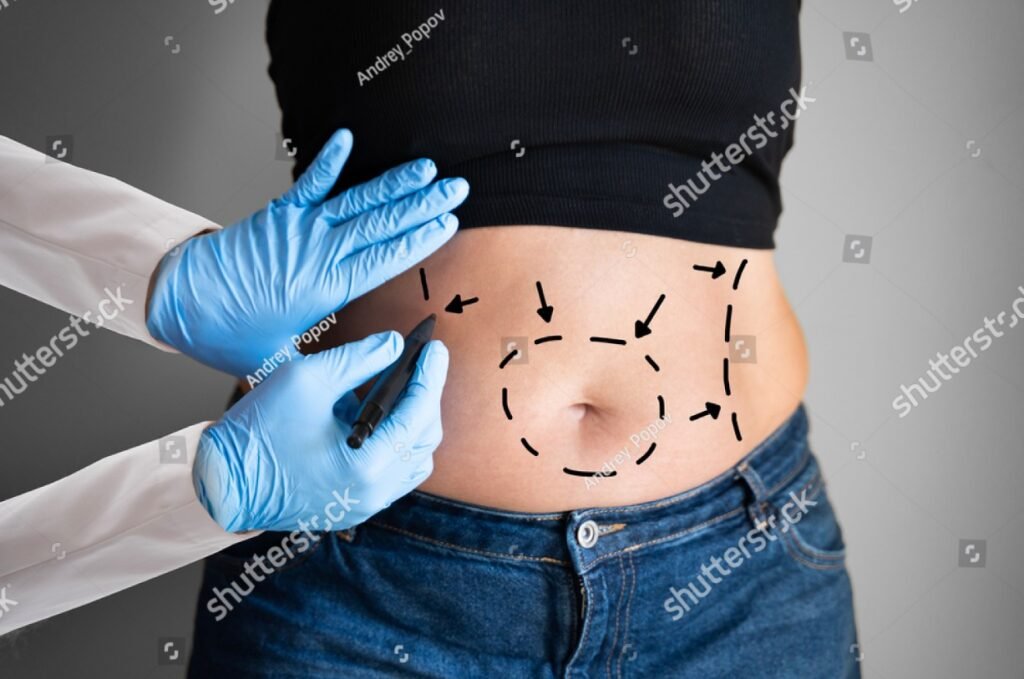
A surgical procedure to remove excess skin and fat from the abdomen while tightening weakened or separated muscles (common after pregnancy or weight loss). Ideal for those seeking a flatter, firmer midsection that diet/exercise alone cannot achieve.
Medical & Cosmetic Benefits:
- Repairs diastasis recti (abdominal muscle separation).
- Eliminates stubborn lower belly fat and sagging skin.
- Restores natural waist contour.
Techniques & Options:
Full Tummy Tuck: Addresses entire abdomen (hip-to-hip incision).
Mini Tummy Tuck: Targets below the navel (shorter scar).
Extended Tummy Tuck: Includes flanks/lower back.
Pain / Discomfort:
Moderate (tightness, swelling for 2–3 weeks; pain medication prescribed).
Recovery:
- Desk work: 10–14 days.
- Exercise: 6–8 weeks.
- Final results: 3–6 months (as swelling resolves).
Cost: From £4,000
A procedure to remove excess skin, fat, or muscle from the eyelids to rejuvenate tired, aged eyes or improve obstructed vision caused by drooping upper lids.
Medical & Cosmetic Benefits:
- Restores peripheral vision (if lids obstruct sight).
- Erases under-eye bags, hooded lids, or puffiness.
- Creates a more youthful, alert appearance.
Techniques & Options:
- Upper Blepharoplasty: Corrects drooping upper lids.
- Lower Blepharoplasty: Addresses under-eye bags.
- Non-Surgical Options: For minor concerns (e.g., filler, laser).
Pain / Discomfort:
- Mild (dryness/itching; managed with eye drops).
Recovery:
- Socially presentable: 7–10 days.
- Final results: 4–6 weeks.
Cost: From £2,500.

A procedure to increase breast size and improve shape using implants to enhance body contour, restore breast volume lost after weight reduction or pregnancy, or achieve better symmetry.
Medical & Cosmetic Benefits:
- Creates improved breast contour and proportion.
- Restores lost breast volume following pregnancy, breastfeeding, or significant weight loss.
- Corrects asymmetry between breasts.
- Boosts self-confidence and body image.
Techniques & Options:
- Implant Placement:
- Submuscular (Under the Muscle): Placed beneath the chest muscle for a more natural look and potentially reduced risk of capsular contracture.
- Subglandular (Over the Muscle): Placed behind the breast tissue but over the chest muscle, often resulting in a shorter recovery time.
- Incision Locations:
- Inframammary: In the fold beneath the breast (most common).
- Periareolar: Along the lower edge of the areola.
- Transaxillary: Through the armpit (scar is hidden away from the breast).
- Implant Types:
- Saline: Filled with sterile salt water; can be adjusted in size and require a smaller incision.
- Silicone Gel: Pre-filled with a cohesive gel that feels more like natural breast tissue.
Pain / Discomfort:
- Moderate, described as soreness, tightness, and swelling for the first few days, managed with prescribed pain medication. Discomfort typically subsides significantly within a week.
Recovery:
- Back to light, daily activities: 3-5 days.
- Socially presentable (wearing normal clothes, light makeup): 7-10 days.
- Return to exercise and strenuous activity: 4-6 weeks.
- Final results (when implants have settled into their natural position): 3-6 months.
Cost: From £3,500

A procedure to remove existing breast implants to address medical concerns, alleviate discomfort, or achieve a desired change in appearance.
Medical & Cosmetic Benefits:
- Relieves pain or discomfort caused by hardened capsules (capsular contracture), implant malposition, or nerve compression.
- Addresses medical concerns such as Breast Implant Illness (BII) or a ruptured implant.
- Creates a more natural breast contour without implants.
- Allows for peace of mind by removing older implants.
Techniques & Options:
- Removal Only: The implant is removed, and the surrounding capsule (scar tissue) is typically left in place.
- En Bloc Capsulectomy: The implant and the entire surrounding scar tissue capsule are removed as a single unit. This is often recommended for ruptured silicone implants or for patients seeking complete removal of all foreign material.
- Total Capsulectomy: The implant is removed, and the entire capsule is also removed, but not necessarily in one single piece.
- Combined with Lift (Mastopexy): Often performed simultaneously to reshape and lift the natural breast tissue after implant removal, preventing excessive drooping.
Pain / Discomfort:
- Typically less than the original augmentation, often described as soreness and bruising. Discomfort is manageable with medication and subsides within a week or two.
Recovery:
- Socially presentable: 7–10 days (bruising and swelling begin to fade).
- Return to most activities: 2-3 weeks.
- Final results (when swelling has fully resolved and breasts have settled into their new shape): 3–6 months.
Cost: From £3,000.

Breast Reduction Surgery (Reduction Mammoplasty)
A procedure to remove excess breast tissue, fat, and skin to achieve a breast size that is more proportionate to the body and alleviate the discomfort associated with overly large breasts.
Medical & Cosmetic Benefits:
- Relieves chronic pain in the back, neck, and shoulders.
- Reduces skin irritation, rashes, and grooves from bra straps.
- Improves ability to participate in physical activity and exercise.
- Creates a more balanced, contoured breast shape that is proportionate to the body.
Techniques & Options:
- Anchor (Inverted-T) Technique: The most common method, involving an incision around the areola, down the breast, and along the breast fold. This allows for significant removal of tissue and skin for a major reshaping.
- Vertical (Lollipop) Technique: Involves an incision around the areola and down to the breast fold, resulting in less scarring than the anchor technique and suitable for moderate reductions.
- Liposuction-Only Reduction: Best for patients with good skin elasticity whose primary concern is excess fatty tissue rather than glandular tissue or sagging skin. Involves minimal scarring.
Pain / Discomfort:
- Moderate, managed with prescribed medication. Patients experience soreness, swelling, and a feeling of tightness for the first week, which gradually improves.
Recovery:
- Socially presentable: 10–14 days (when most swelling and bruising have subsided).
- Return to non-strenuous work and daily activities: 2-3 weeks.
- Final results (when breasts have settled into their new shape and scars have begun to fade): 3–6 months.
Cost: From £5,000.

What It Is:
A surgical or minimally invasive procedure to lift sagging brows, smooth forehead wrinkles, and restore a more youthful, open-eyed appearance.
Medical & Cosmetic Benefits:
- Corrects “hooded” brows that obscure eyelids.
- Reduces horizontal forehead lines.
- Creates a refreshed, less angry/sad expression.
Techniques & Options:
- Endoscopic Brow Lift: Minimally invasive (tiny incisions).
- Temporal Lift: Targets outer brows (shorter recovery).
- Direct Brow Lift: For significant sagging (more noticeable scar).
Pain / Discomfort:
- Mild (tightness, numbness for 1–2 weeks).
Recovery:
- Back to work: 7–10 days.
- Exercise: 3 weeks.
Cost: From £5,000.

A comprehensive procedure to reposition sagging facial tissues, remove excess skin, and smooth deep wrinkles, restoring a youthful, refreshed appearance without an “overdone” look. Targets the lower face, jawline, and neck.
Medical & Cosmetic Benefits:
- Reverses jowls, marionette lines, and nasolabial folds.
- Tightens loose neck skin (when combined with a neck lift).
- Long-lasting results (10+ years with proper care).
Techniques & Options:
- SMAS Facelift: Deep muscle layer repositioning (most natural).
- Mini Facelift: For mild sagging (shorter scars, quicker recovery).
- Non-Surgical Alternatives: Thread lifts, fillers (temporary).
Pain / Discomfort:
- Moderate (tightness, swelling for 2–3 weeks; pain meds prescribed).
Recovery:
- Socially presentable: 10–14 days.
- Exercise: 4–6 weeks.
- Final results: 3–6 months.
Cost: From £6,000.

A subtle yet transformative surgery to shorten the space between the nose and upper lip, creating a fuller, more defined lip without implants or filler. Ideal for those with a long philtrum or thin upper lip.
Medical & Cosmetic Benefits:
- Enhances natural lip shape (avoids “duck lips”).
- Permanent results (unlike fillers).
- Improves facial harmony.
Techniques & Options:
- Bullhorn Lift: Incision under the nose (most common).
- Corner Lift: Elevates drooping lip corners.
Pain / Discomfort:
- Mild (tightness for 3–5 days).
Recovery:
- Swelling subsides: 7–10 days.
- Final results: 4–6 weeks.
Cost: From £2,000

A procedure to tighten loose neck muscles (platysma) and remove excess skin, eliminating “turkey neck” or horizontal bands for a sharper jawline. Often paired with a facelift.
Medical & Cosmetic Benefits:
- Reduces double chin (when combined with lipo).
- Restores youthful neck contour.
Techniques & Options:
- Corset Platysmaplasty: Tightens vertical neck muscles.
- Direct Excision: For significant sagging (scar along jawline).
Pain / Discomfort:
- Moderate (tightness when swallowing for 1–2 weeks).
Recovery:
- Back to work: 10–14 days.
- Exercise: 3–4 weeks.
Cost: From £3,500.

A sophisticated facial procedure to reshape the nose by modifying bone, cartilage, and tissue. Performed to enhance facial harmony, correct structural issues, or both, it is one of the most complex and sought-after cosmetic surgeries, underscoring the critical need for an expert surgeon.
Medical & Cosmetic Benefits:
- Improves nasal function by correcting a deviated septum or narrow airways to enhance breathing.
- Creates a more balanced facial profile by addressing a dorsal hump, wide bridge, or bulbous tip.
- Refines the nasal tip that may be drooping, upturned, or overly large.
- Corrects asymmetry or deformities from injury or birth.
Techniques & Options:
- Open Rhinoplasty: A small incision is made across the columella (the tissue between the nostrils), providing the surgeon with maximum visibility for extensive reshaping. This is often preferred for complex revisions.
- Closed Rhinoplasty: All incisions are made inside the nostrils, resulting in no external scarring. Ideal for more minor modifications.
Pain / Discomfort:
- Typically mild to moderate. Patients report feeling pressure, congestion, and soreness rather than sharp pain, which is managed with medication. Most discomfort subsides within a few days.
Recovery:
- Socially presentable (after cast removal and initial swelling subsides): 10–14 days.
- Return to gentle activities: 1-2 weeks.
- Return to exercise and strenuous activity: 4-6 weeks.
- Final results (when subtle swelling has fully resolved and the nose refines to its final shape): 12 months or longer.
Cost: From £5,500.
A Critical Note on Expertise:
Given the nose’s central role in facial aesthetics and breathing, the surgeon’s skill is paramount. An inexperienced approach can lead to long-term functional problems like chronic nasal obstruction or structural weakness, even if the initial aesthetic seems acceptable. Furthermore, a result that appears pleasing initially may develop complications or aesthetic imbalances years later. Therefore, choosing a surgeon with extensive, specialized experience in the functional and aesthetic anatomy of the nose is the most crucial step in ensuring a successful, healthy, and lasting outcome. This focus on expert care is why our practice is highly regarded for both primary and complex revision procedures.

A precise surgical procedure to reshape the bone, cartilage, and tissue of the nose to improve its appearance, enhance facial harmony, or correct breathing impairments. As one of the most complex and commonly performed facial procedures, its success is critically dependent on the surgeon’s expertise to ensure both aesthetic and functional integrity.
Medical & Cosmetic Benefits:
- Improves nasal function by correcting a deviated septum or narrow nasal passages to alleviate breathing difficulties.
- Creates a more balanced facial profile by addressing concerns such as a dorsal hump, wide bridge, or disproportionate size.
- Refines the nasal tip to correct drooping, bulbosity, or asymmetry.
- Corrects deformities resulting from previous injury.
Techniques & Options:
- Open Rhinoplasty: Involves a small incision across the columella (the soft tissue between the nostrils), allowing the surgeon direct visibility for significant reshaping. This approach offers unparalleled precision for complex adjustments.
- Closed Rhinoplasty: All incisions are made internally, within the nostrils. This technique is suitable for more limited modifications and leaves no external scar.
Pain / Discomfort:
- Mild to moderate. Patients typically experience a feeling of pressure, congestion, and soreness, which is easily managed with medication. Significant discomfort usually subsides within the first week.
Recovery:
- Socially presentable (after cast removal and initial swelling decreases): 10–14 days.
- Return to most daily activities: 1-2 weeks.
- Return to exercise and strenuous activity: 4-6 weeks.
- Final results (when subtle swelling has fully resolved and the nose settles into its final contour): 12 months or longer.
Cost: From £3,500.
The Importance of Surgical Expertise:
The nose’s central role in facial balance and breathing makes the surgeon’s skill the most critical factor. An inexperienced approach can lead to long-term functional issues, such as chronic nasal obstruction, or aesthetic imbalances that may only become apparent years later. Choosing a surgeon with dedicated expertise in the intricate functional and aesthetic anatomy of the nose is essential for a successful, healthy, and enduring outcome.

A minimally invasive lift targeting the outer eyebrows and temples to correct hooded eyes or a tired expression.
Medical & Cosmetic Benefits:
- Lifts sagging brows without a full facelift.
- Creates a more open-eyed look.
Techniques & Options:
- Endoscopic: Tiny incisions near hairline.
Pain / Discomfort:
- Minimal (tightness for 3–5 days).
Recovery:
- Back to work: 5–7 days.
Cost: From £4,000.

A surgical procedure to remove excess skin and fat from the thighs to create a smoother, more toned leg contour. It is often sought after significant weight loss to address the loose, hanging skin that remains.
The demand for thigh lift surgery has seen a consistent rise, closely linked to the increasing number of bariatric (weight loss) surgery procedures. As more people achieve massive weight loss, the need for body contouring surgeries to remove resulting excess skin has grown significantly.
Medical & Cosmetic Benefits:
- Eliminates skin irritation and chafing caused by inner thighs rubbing together.
- Creates a more proportionate and contoured silhouette by reducing sagging skin.
- Improves comfort during physical activity and clothing fit.
- Boosts self-confidence by refining the leg’s appearance.
Techniques & Options:
- Inner (Medial) Thigh Lift: Focuses on the upper inner thigh. An incision is typically made in the groin crease, making scarring less visible.
- Vertical Thigh Lift: Addresses significant sagging from the upper to the mid-thigh. Involves an incision from the groin down the inner thigh, allowing for more dramatic skin removal.
- Mini Thigh Lift: A less extensive version for patients with mild skin laxity confined to the very upper thigh.
- Extended Thigh Lift/Buttock-Thigh Lift: Combines thigh and buttock lifting for a comprehensive lower body contouring, often after massive weight loss.
Pain / Discomfort:
- Patients can expect soreness, swelling, and a feeling of tightness for the first 1-2 weeks, managed with prescribed pain medication.
Recovery:
- Socially presentable (when bruising and initial swelling have subsided): 2–3 weeks.
- Return to non-strenuous work: 3-4 weeks.
- Final results (when swelling has fully resolved and scars have matured): 6–12 months.
Cost: From £3,500.

CONTACT us
At International Aesthetics, we understand that choosing a cosmetic procedure is a significant decision. Our dedicated team is here to guide you through every step of the process, ensuring that your journey to enhanced beauty and confidence is smooth, informed, and fulfilling.